
amfAR Study Finds More Than 1,700 HIV Service Sites Worldwide Shut Down Following Cuts to PEPFAR Funding
amfAR Study Finds More Than 1,700 HIV Service Sites Worldwide Shut Down Following Cuts to PEPFAR Funding
The PEPFAR Pulse Study, conducted between November 2025 and April 2026, is the first independent global look at where PEPFAR’s operations currently stand, following widespread disruptions and funding cuts in 2025
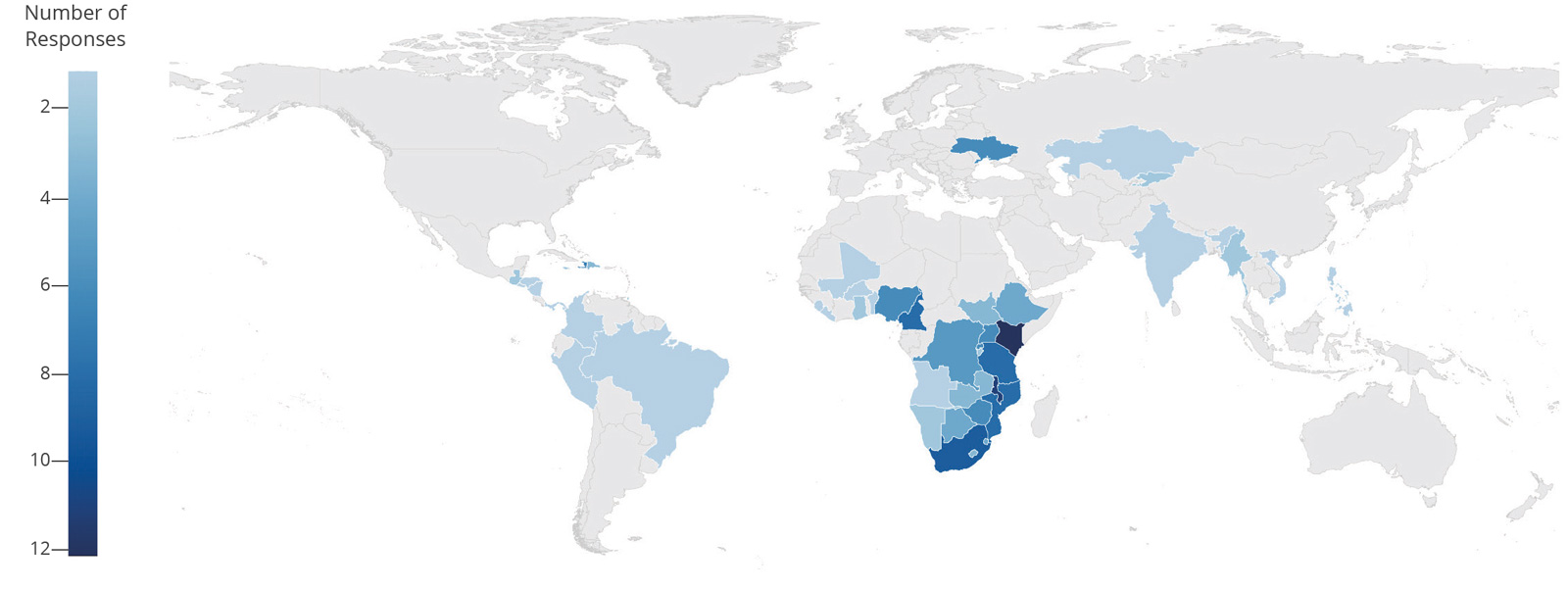
- Responses to the PEPFAR Pulse Study represent 166 PEPFAR-funded organizations from 46 countries
- At least 1,700 HIV service sites around the world, including public health facilities, mobile clinics, drop-in centers, and specialized HIV facilities, closed entirely following terminated or delayed PEPFAR payments
- HIV prevention was hit hard: prevention spending fell 51% from 2024 to 2025, and more than 25% of PEPFAR implementing partners permanently stopped providing pre-exposure prophylaxis, or PrEP
NEW YORK, July 21, 2026 — More than 160 partners implementing programs for PEPFAR, the U.S. President’s Emergency Plan for AIDS Relief, in 46 countries have provided the first conclusive look into where the program’s operations currently stand, following major disruptions and funding cuts in 2025. The results of this survey are detailed in the PEPFAR Pulse Study, published today by amfAR, Funders Concerned About AIDS, the Johns Hopkins Bloomberg School of Public Health, and Data Etc.
Survey responses come from 166 PEPFAR implementing partners located across all seven regions of the world, representing 23% of all country-level implementing partners receiving PEPFAR funding as of 2025. They report the closure of 1,714 HIV service delivery sites around the world. Nearly four-in-five respondents (77%) reported at least one terminated award or delayed payment. Less than 2% reported they were able to find alternate sources of funding adequate to offset the loss of U.S. funding.
PEPFAR Pulse Survey Responses by Country
Analysis of the data collected shows that cuts were not just widespread, but they hit hardest at services that do the most to curb the HIV epidemic: reaching those at high risk, finding people who aren’t aware they’re living with HIV, and maintaining people on treatment through community outreach.
Few areas were hit harder than HIV prevention, including a 51% decrease in prevention spending from fiscal year 2024 to fiscal year 2025. Survey data show more than 25% of implementing partners permanently stopped providing pre-exposure prophylaxis, or PrEP, and condom and lubricant expenditures fell by 93%.
Severe disruptions were also noted in services directed at key populations, defined as gay men and other men who have sex with men, sex workers, people who use drugs, transgender and other gender-diverse people, and people in prison, who account for more than half of all new HIV diagnoses worldwide. PEPFAR Pulse respondents reported 73% of PEPFAR implementing partners stopped at least one key population-specific service and 67% stopped outreach services, despite UNAIDS data that show members of key populations and their partners represent more than half of new HIV acquisitions globally.
Elise Lankiewicz, amfAR Senior Policy Associate and PEPFAR Pulse Study co-lead author:
“The PEPFAR Pulse Study shows an HIV response on the verge of backsliding. Treating patients at a clinic is necessary, but it isn’t enough on its own. The people at highest risk, including adolescent girls and young women, children, and other marginalized groups, are often least likely to reach a clinic and stay in care, without outreach and supportive services. With those services lost and prevention and testing cut, the number of people who need treatment will keep growing, even as the capacity to deliver it shrinks.”
Dr. Jennifer Sherwood, amfAR Director of Research, Public Policy, and co-lead author:
“It’s not possible to keep HIV treatment on track with an eroded system of delivery and support services. While overall treatment numbers appear stable for now, PEPFAR Pulse data document urgent declines in testing, treatment support, and community-based delivery mechanisms – services which are critical to a functional treatment program. Locally based organizations have been hit hardest of all when they should be the foundation of a sustainable, locally led HIV response.”
Masen Davis, Executive Director of Funders Concerned About AIDS:
“The PEPFAR Pulse Study shows that this is not a series of isolated program disruptions. It is a system-wide breakdown that has weakened prevention, community-led organizations, and the HIV workforce. The findings make clear that treatment cannot be sustained without the broader systems that prevent new infections, connect communities to care, and support people to stay in treatment.”
“PEPFAR has saved millions of lives and remains indispensable to the global HIV response This report should be understood as both an urgent warning and a practical roadmap for restoring that progress. We urge PEPFAR leadership, governments, philanthropic donors, implementing partners, and civil society to work together to act quickly on the report’s recommendations, stabilize essential services, and rebuild the infrastructure needed to get the response back on track.”
Dr. Stefan Baral, Professor, Department of Epidemiology, Johns Hopkins Bloomberg School of Public Health:“The collapse of programs that directly addressed the needs of populations disproportionately affected by HIV is particularly concerning given that addressing unmet HIV prevention needs was central to both avoiding HIV-related morbidity and mortality and onward HIV transmission. These programs were equitable by design, but they were also efficient in specifically addressing the needs of smaller populations that are often excluded from mainstream health services given significant social stigma or even criminalization of identity, practices, and dependencies.”
Alana Sharp, Principal of Data Etc.:
“PEPFAR Pulse respondents represent 23% of all country-level PEPFAR implementing partners, but they make a remarkably representative sample. While 55% of our responses come from Eastern and Southern Africa, 57% of all PEPFAR partners come from the region.”
The PEPFAR Pulse Study by the numbers:
- 77.2% of PEPFAR implementing partners had an award terminated or payment delayed during 2025
- 1,714 clinics, drop-in centers, mobile clinics, and service delivery sites closed due to funding cuts
- 72.6% of organizations providing key population services permanently stopped providing at least one service
- 63.3% of organizations providing prevention of mother-to-child HIV transmission services reported interruptions to these services, with 22.4% ending them entirely
- 43% of organizations providing prevention services permanently stopped at least one service
- 21.2% of organizations providing HIV care and treatment stopped at least one service
- 63% of organizations based in the country where they provide services lost at least one award, as opposed to 41% of international organizations
Since 2003, PEPFAR has been the cornerstone of the global HIV response and is credited with saving more than 26 million lives in more than 50 countries. Created initially under the George W. Bush Administration, it has historically enjoyed a high level of bipartisan support and PEPFAR is the largest commitment by any nation to address a single disease in history. There are 40 million people living with HIV around the world and PEPFAR supports 20 million of them on lifesaving HIV treatment.
The report’s full text is available here.
About amfAR
amfAR is a leading nonprofit dedicated to advancing scientific discovery and transforming global health with a primary and enduring commitment to ending the HIV/ AIDS epidemic. Serving as a catalyst for breakthrough science, amfAR supports innovative research in areas where viruses and the immune system play a defining role, including cancer, neurological conditions, autoimmune disorders, and other viral diseases. Through strategic investments, global research partnerships, and evidence-based policy leadership, amfAR helps accelerate discoveries that improve health and save lives. Since 1985, amfAR has raised more than $950 million and awarded in excess of 3,900 grants to scientists worldwide. Learn more at www.amfar.org.
Media Contact:
Robert Kessler; Associate Director, Program Communications
(212) 806-1602
robert.kessler@amfar.org
Share This:
