
amfAR Research Council
amfAR Research Council
The amfAR Research Council (aRC) helps guide the strategic direction of research funding investments across HIV, virology, immunology, and AI-enabled science. All funded work, whether directly focused on HIV or in adjacent fields, must demonstrate how it can inform, strengthen, or accelerate HIV cure strategies and improve outcomes for people living with HIV.
aRC activities include:
- Offering expertise and guidance on scientific, technological, and other matters relevant to amfAR’s mission.
- Identifying potential gaps, redundancies, or partnership prospects within proposed funding initiatives.
- Recommending new research areas, as well as facilitating collaborations between amfAR and the global scientific community.
“Today we are building on our legacy by investing across the sciences shaping human health – from virology and immunology to AI-enabled discovery. By bringing together leaders from an array of fields, the amfAR Research Council will help guide bold ideas and accelerate discoveries that move us closer to a cure, while also advancing breakthroughs that benefit global health.”
—Kyle Clifford, amfAR CEO
The aRC is led under the direction of Dr. Andrea Gramatica, amfAR’s Vice President of Research. With expertise in HIV, aging, neuroscience, cancer biology, and autoimmunity, members of the aRC include:
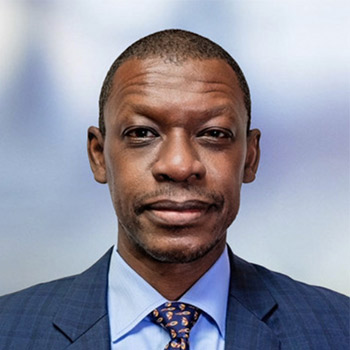
Lishomwa Ndhlovu, MD, PhD; Chair
Dr. Ndhlovu is the Herbert J. and Ann L. Siegel Distinguished Professor of Medicine and Professor of Immunology in Medicine and in Neuroscience at Weill Cornell Medical College in New York, NY (USA). A translational immunologist, he leads a research team dedicated to confronting the challenges of HIV and aging, with an emphasis on limiting disease complications, understanding immune activation and neurocognitive outcomes, and developing curative strategies; his group has also applied this expertise to SARS-CoV-2 infection and COVID-19 pathogenesis.
Dr. Ndhlovu completed his medical training at the University of Zambia School of Medicine and obtained his PhD in medicine from Tohoku University School of Medicine in Japan.
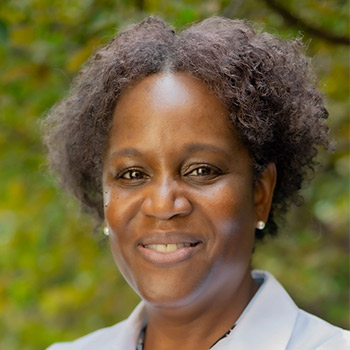
Amanda M. Brown, PhD
Dr. Brown is the Fannie Gaston-Johansson Professor of Neurology and Neuroscience at the Johns Hopkins University School of Medicine in Baltimore, MD (USA). Her research focuses on neuro-HIV and HIV neuropathogenesis, particularly the cellular pathways in primary human macrophages that are required for HIV-1 replication and that drive inflammatory damage in the brain.
Dr. Brown obtained her PhD in microbiology and immunology from the Albert Einstein College of Medicine, NY.
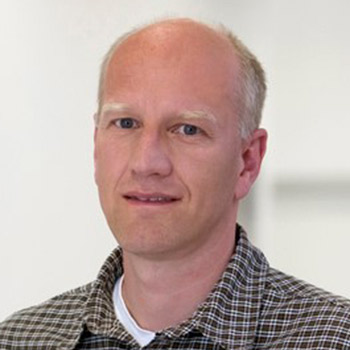
Ulf Dittmer, PhD
Dr. Dittmer is Director of the Institute of Virology at the University Hospital Essen and Professor at the University of Duisburg-Essen (Germany). His research is focused on immune responses against chronic viral infections, with a special emphasis on retroviral immunity, regulatory T cells, and the development of vaccines and immunotherapies to control viral persistence, using the Friend retrovirus model to uncover fundamental principles of antiviral immunity.
Dr. Dittmer received his doctorate degree in virology from the University of Göttingen (Germany).
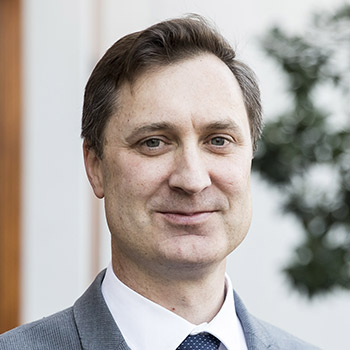
Kenneth Micklethwaite, MD, PhD
Dr. Micklethwaite is a hematologist and physician-scientist working in the fields of bone marrow transplantation and cell and gene therapy at Westmead Hospital in Sydney (Australia). He is Medical Director of the Blood Transplant and Cell Therapies Laboratory/Sydney Cellular Therapies Laboratory and Clinical Lead for the CAR T-cell program, as well as a clinical associate professor at the University of Sydney. His research focuses on developing novel cellular and gene therapies, including first-in-human CAR T-cell trials for blood cancers and emerging approaches to immune-based therapies for infection and malignancy.
Dr. Micklethwaite received his medical degree (MBBS) from the University of New South Wales in Sydney and his doctorate degree in medicine from the University of Sydney, and completed specialist training in hematology and cellular therapies in Australia.
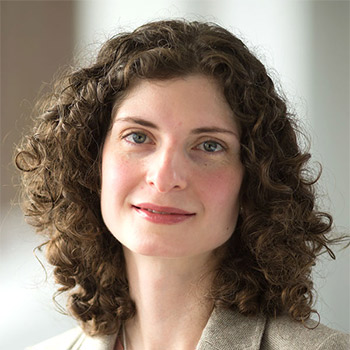
Sofiya Milman, MD
Dr. Milman is Professor of Medicine (Endocrinology) and of Genetics, Interim Vice-Chair for Research in the Department of Medicine, and Director of Human Longevity Studies at Einstein’s Institute for Aging Research at Albert Einstein College of Medicine in New York, NY (USA). A physician-scientist and endocrinologist, she leads an interdisciplinary research program on healthy longevity, focusing on centenarians and their families to identify genetic and endocrine mechanisms that protect against age-related diseases and to inform interventions that extend health span.
Dr. Milman completed her medical training at the State University of New York at Stony Brook School of Medicine and her residency and fellowship in internal medicine and endocrinology at Montefiore Medical Center, Bronx, NY.
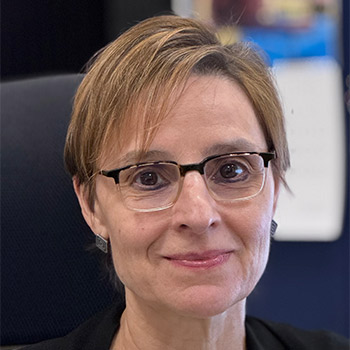
Susan Moir, PhD
Dr. Moir is a Senior Investigator and Chief of the B-cell Immunology Section in the Laboratory of Immunoregulation at the National Institute of Allergy and Infectious Diseases (NIAID), National Institutes of Health, in Bethesda, MD (USA). Her research program focuses on human B-cell biology in HIV and other infectious and non-infectious diseases, defining how B-cell subsets, antibody responses, and immune dysregulation contribute to pathogenesis and inform vaccine and immunotherapy strategies.
Dr. Moir received her doctorate degree in immunology and microbiology from Université Laval in Quebec City (Canada).

Ujjwal Rathore, PhD; Junior Member
Dr. Rathore is a Staff Research Scientist in Dr. Alex Marson’s Lab at the Gladstone-UCSF Institute of Genomic Immunology in San Francisco, CA (USA). His research focuses on host–virus interactions and HIV latency, using high-throughput CRISPR gene editing, protein engineering, and genomic approaches to identify host factors that regulate HIV infection and to develop new strategies to perturb latent reservoirs.
Dr. Rathore completed his doctoral training in molecular biophysics at the Indian Institute of Science in Bangalore (India).
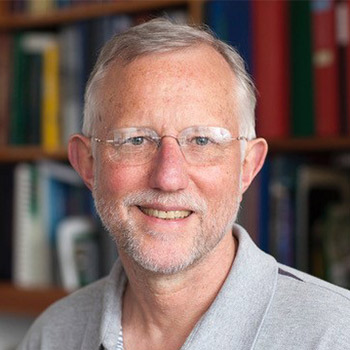
Charles M. Rice, PhD; Honorary Member
Dr. Rice is the Maurice R. and Corinne P. Greenberg Professor in Virology and Scientific and Executive Director of the Center for the Study of Hepatitis C at The Rockefeller University in New York, NY (USA). An internationally recognized virologist, he is best known for his pioneering work on hepatitis C virus, including providing definitive evidence that the virus alone can cause hepatitis, which enabled development of curative antiviral therapies. In 2020, his discoveries together with Harvey J. Alter, MD, and Michael Houghton, PhD, were recognized with the Nobel Prize in Physiology or Medicine.
Dr. Rice received his PhD in biochemistry from the California Institute of Technology.
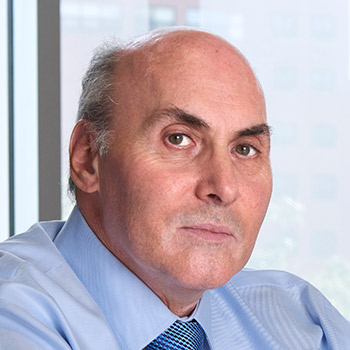
Drew Weissman, MD, PhD; Honorary Member
Dr. Weissman is the Roberts Family Professor in Vaccine Research at the Perelman School of Medicine, University of Pennsylvania, in Philadelphia, PA (USA). An immunologist and vaccine researcher, he is globally recognized for his discoveries on nucleoside-modified mRNA and lipid nanoparticle delivery that enabled the development of effective mRNA vaccines against COVID-19 and are now being applied to vaccines and therapies for a wide range of diseases.
Dr. Weissman earned both his MD and PhD degrees from Boston University and later joined the University of Pennsylvania, where his work with Katalin Karikó, PhD, on mRNA modifications was recognized with the 2023 Nobel Prize in Physiology or Medicine.