
Scientific Highlights from AIDS 2026
At the 26th International AIDS Conference, promising research and an uncertain future for the global HIV response took center stage
By Robert Kessler

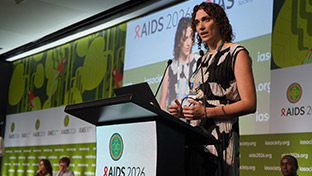
“I am affirmed in my conviction we will find an HIV cure and an effective vaccine,” were the strong words of outgoing International AIDS Society president Beatriz Grinsztejn as she closed the 26th International AIDS Conference in Rio de Janeiro, Brazil.
If the biannual conference had a dominating narrative, it was one of groundbreaking advancements and broken systems. While much was made of the tumultuous funding landscape facing the global HIV response, the science presented at the conference was fascinating and exciting. A real buzz permeated the Riocentro exhibition center as session after session unveiled promising research, primarily oriented around HIV cure and vaccine development, long-acting treatment and prevention medications, and strategies to integrate HIV care into broader healthcare settings.
Choice emerged as a powerful tool in creating equity between those who currently do and do not have access to HIV treatment and prevention.
Several studies showed a majority of people prefer the newest prevention option, long-acting PrEP, specifically citing the convenience, reduced stigma, and the freedom of not depending on daily pills. Another study showed that a new, once-monthly PrEP pill called alimatravir could be made and sold for just $3 per person per year, providing an additional, low-cost option for those seeking long-acting options.
In Rio, we also saw the first, promising results from clinical trials of a once-weekly HIV treatment. Studies that included people living in Asia, Australia, Europe, the Americas, and South Africa found that a weekly islatravir/lenacapavir regimen was as effective as daily treatment in people with well controlled HIV.
AIDS 2026 also saw a stronger focus on HIV cure and vaccine research than in previous years, a cause for optimism in the decades-long search for these potential breakthroughs. Researchers remain bullish about the potential of broadly neutralizing antibodies (bNAbs), which would enhance a person’s own immune system to fight HIV, rather than relying on medications delivered via pill or injection. amfAR’s research funding has leaned heavily into the promise of bNAbs in recent years as well.
In a conference session on HIV cure progress, researchers presented both the 12th and 13th people purportedly cured of HIV, both via stem cell transplants. Notably, the Essen Patient is the first person to undergo the process who is also co-infected with hepatitis B and the Kansas City Patient is, at 21, the youngest person to yet to achieve potential remission.
While stem cell transplantation remains a high-risk procedure only appropriate for people with life-threatening cancers, researchers say that a growing cohort of people cured of HIV through this process provides additional clues about how a person’s own immune system could be guided to permanently control or eradicate HIV, without relying on medication.
Amidst all this excitement about boundary-pushing science, fears about the long-term health of the global HIV response lingered. A UNAIDS report presented at the conference showed international funding for HIV has hit its lowest level in nearly 20 years, from $8.8 billion in 2024 to just $7.3 billion in 2025, as 3,400 people every day continue to acquire HIV.
And amfAR’s own PEPFAR Pulse Study put definitive figures on the impact U.S. funding cuts and policy shifts had on PEPFAR, the U.S.-funded program that has, so far, saved 26 million lives and currently supports 20 million people on HIV treatment. In a survey of PEPFAR’s implementers, the Pulse Study found more than 1,700 HIV service delivery sites had closed worldwide and nearly three-in-four organizations providing key population-specific services had to stop at least one.
Strategies to preserve services for members of key populations—gay and other men who have sex with men, transgender and gender-diverse people, sex workers, and other communities who account for more than half of all new HIV diagnoses globally—was the focus of a symposium at AIDS 2026 moderated by amfAR CEO Kyle Clifford.

Throughout the conference, amfAR’s staff and researchers participated in more than 25 sessions, workshops, and poster presentations.
Facing limited resources, and as HIV becomes, for many millions of people, a chronic, manageable condition, integration of HIV care into existing healthcare structures emerged at AIDS 2026 as a priority. Several studies showed improved health outcomes when HIV services are folded into routine healthcare, rather than existing in isolation. A study from London showed more than 70% of adults who’d acquired HIV at birth now have a metabolic condition, pointing toward the need for care that considers the whole person, not just HIV.
“Our greatest challenge is ensuring what works reaches everyone,” incoming IAS president Kenneth Ngure said. And if anything was clear at AIDS 2026 it was this: HIV research continues to be vitally important, as innovation and greater access to choice are going to be imperative in an environment where financial resources are limited.
Robert Kessler is amfAR’s Associate Director of Program Communications.
Share This:
